Freemasonry
The Brotherhood That Shaped the World
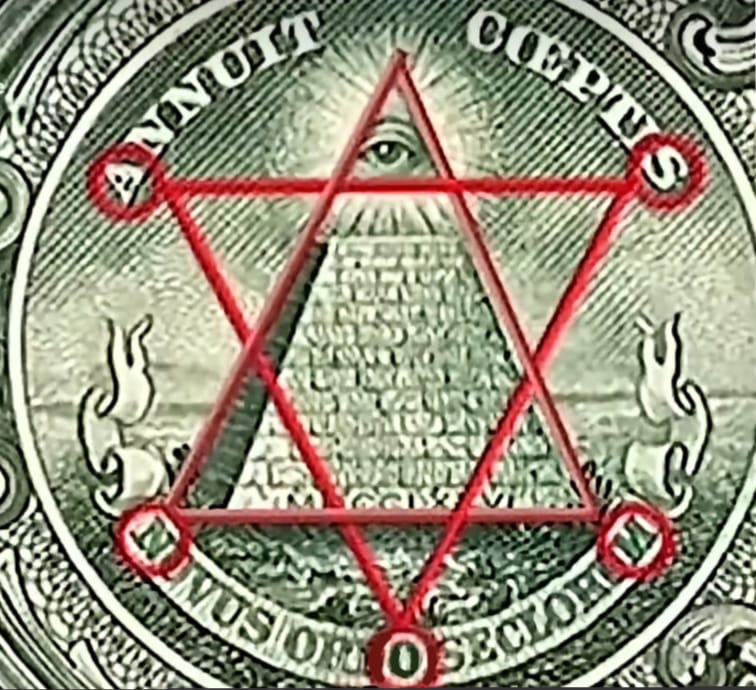
The US dollar bill - handled by billions of people every single day - is perhaps the most brazen Masonic signature in existence. The pyramid, the All-Seeing Eye, the Latin phrases, all designed by Founding Fathers who were documented Freemasons. The All-Seeing Eye is a Masonic symbol. The Latin phrase "Annuit Coeptis" translates to "He approves of the undertaking" — language consistent with Masonic ritual philosophy. But look closer at the letters arranged around the seal and something impossible jumps out — the letters A, S, M, O, N sit circled within the design. Rearrange them and they spell MASON. This was not accidental decoration on the currency of the most powerful nation on earth. This was a signature — left in plain sight by the men who built the system, for those who knew how to look.
Chapter 1 — Their Symbols Are Everywhere
 Facebook Logo
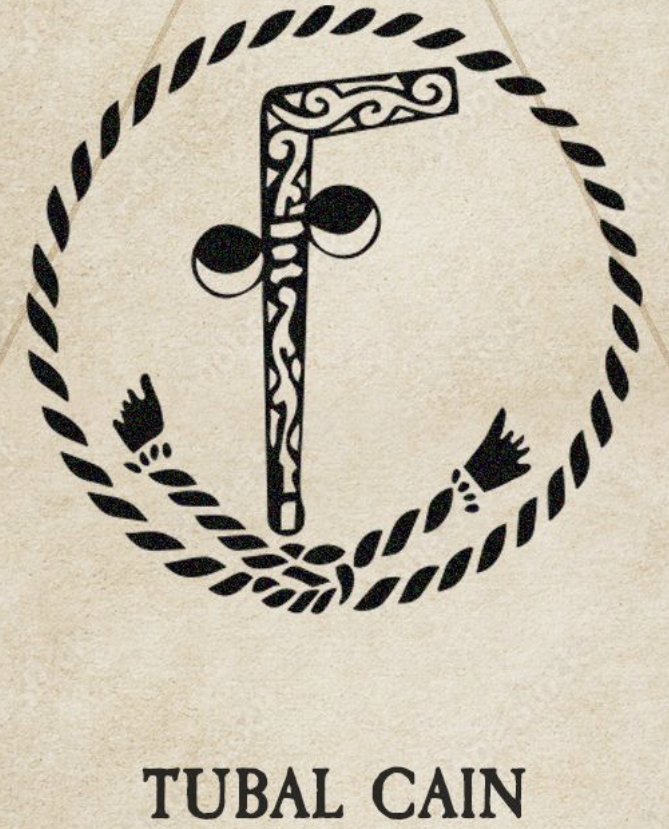 Tubal Cain - Masonic Symbol
 Gmail Logo
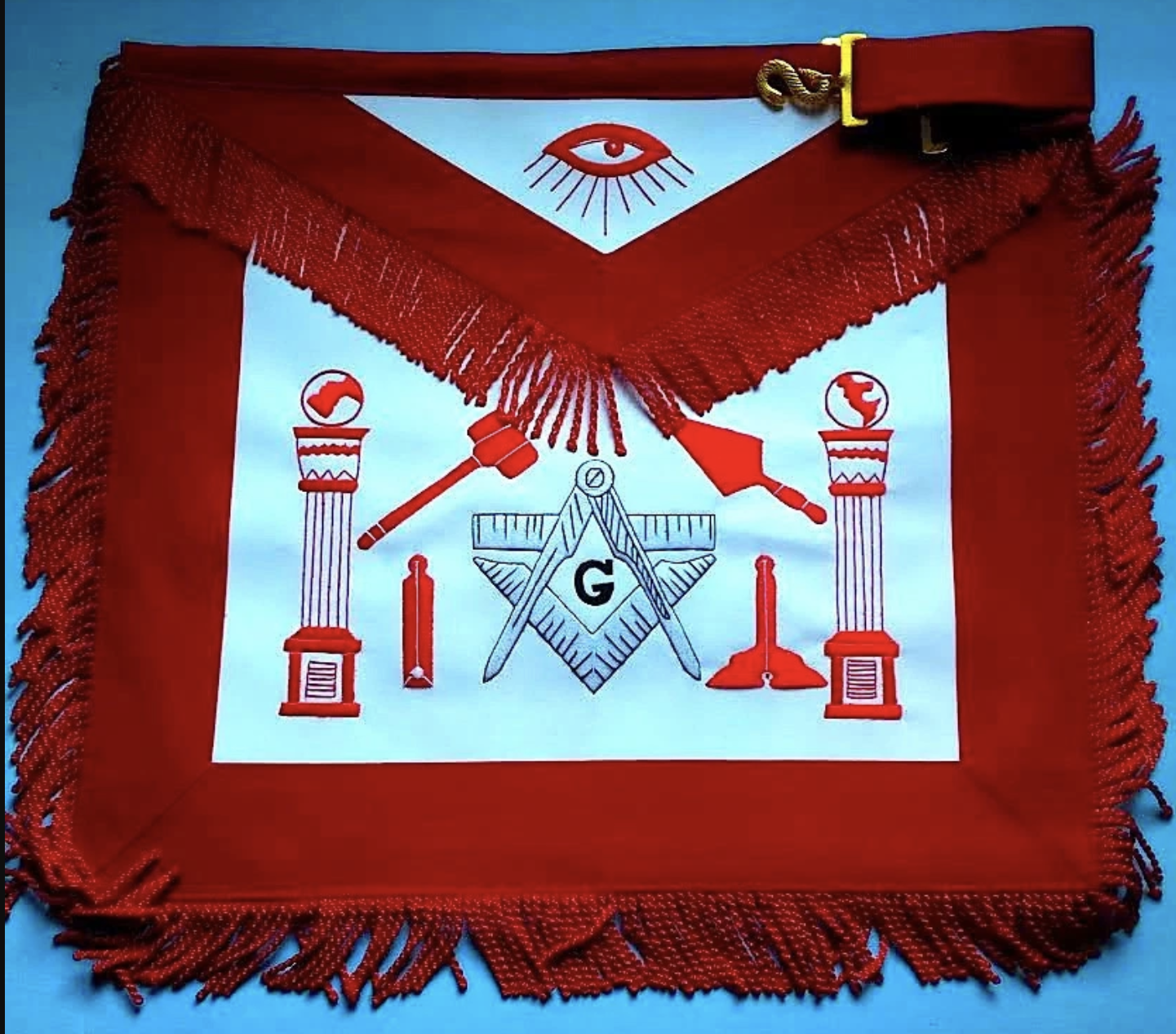 Royal Masonic Apron
 Apple App Store Icon
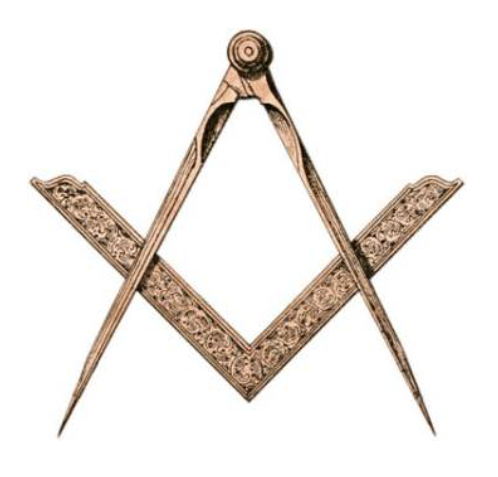 Freemason Compass
These are not the logos of small companies. These are the platforms and tools used by billions of people every single day. Whether by coincidence or by design, the symbols of a centuries-old secret brotherhood are embedded in the fabric of modern life.
Chapter 2 — The Presidents, The Powerful, and The Pattern
This is the part that is impossible to ignore. Consider the following verified Freemasons who held the highest office in the United States:
George Washington, Andrew Jackson, James Polk, James Buchanan, Andrew Johnson, James Garfield, William McKinley, Theodore Roosevelt, William Howard Taft, Warren Harding, Franklin D. Roosevelt, Harry Truman.
That is not a coincidence. That is a pattern.
Beyond American presidents, major world figures including Stalin, Lenin, Karl Marx, and even William Shakespeare are either verified members or have documented close connections to the organization.
The main question is did these men become powerful in the outside world because of their high position and connections in the organization, or did they become Masons after becoming powerful? At the 33rd degree level, the organization commands influence, networks, and resources that span governments, militaries, and financial institutions. Becoming a 33rd degree Mason does not just mean you joined a club — it means the club chose you.
Chapter 3 — The Accusations
This is where it gets dark.
For centuries, Freemasonry has been accused of being far more than a brotherhood of powerful men. Hundreds of conspiracy theories have surrounded Freemasonry since the late 18th century, typically falling into three categories — political control of governments, Satanic or anti-Christian religious practices, and manipulation of culture.
The Devil Worship Accusation
Accusations of devil worship against Freemasons arose in the late 18th century amid religious opposition. The Catholic Church formally condemned Freemasonry as early as 1738, and by 1884 Pope Leo XIII portrayed Freemasonry's principles as a form of religious indifferentism akin to the deception of the ancient serpent. The Vatican did not mince words — Pope Leo XIII issued an encyclical in 1884 that condemned Freemasonry as a "sect of the devil."
The accusations went even deeper with claims that the higher degrees of Freemasonry involve the worship of Lucifer — not as evil, but as a god of light and enlightenment. Critics point to the writings of Albert Pike, a 33rd degree Mason, whose texts have been interpreted as describing Lucifer as the true deity of the upper degrees — knowledge deliberately hidden from lower ranking members who have no idea what the organization truly worships at its core.
The Shadow Government Theory
The accusation is not just that Freemasons hold powerful positions — it is that the people truly running the world are names you will never read in a history book. Faceless elites operating behind governments, financial systems, and media institutions, using elected officials as nothing more than a public front. The presidents and prime ministers the public votes for are not the ones making the real decisions. The real decisions are made in lodge rooms, behind closed doors, by men bound by oaths of secrecy that they swore on pain of death.
There are claims that the British judiciary is heavily infiltrated with Masons, who give fellow Masons preferential treatment in court, quietly subverting the legal system from within. There are claims that Freemasonry was the driving force behind both the French and Russian Revolutions — not as a liberation movement, but as a calculated dismantling of existing power structures so that Masonic elites could install their own order in the aftermath.
The Murder Cover-Up
One of the earliest and most explosive scandals involved the disappearance and presumed murder of William Morgan, a former Mason who threatened to expose the organization's secrets. The incident sparked a wave of anti-Masonic sentiment so severe it led to the formation of the Anti-Masonic Party in the United States. The message was clear to anyone paying attention — talk, and you disappear.
The accusations have never stopped. They have only grown.
Chapter 4 — Two Faces of the Same Organization
This is where Freemasonry gets interesting. The organization effectively operates with two faces.
The public face is what most people see — a respectable fraternal club that anyone can apply to join, that donates to charities, holds community events, and makes members feel part of something exclusive and meaningful. These members are real, their contributions are real, but they are essentially the front of the organization. They have no idea about the inner workings or the true extent of its power and reach.
The inner face — the 33rd degree — is an entirely different matter.
Chapter 5 — The Hierarchy: Not All Masons Are Equal
Freemasonry is not a flat organization. Every member begins at the 1st degree — the Entered Apprentice — the entry point into the brotherhood. Within roughly a year, through study and ritual, a member can advance to the 3rd degree — the Master Mason — which is already considered a globally recognized and respected rank within the brotherhood. Most Freemasons spend their entire membership at the 3rd degree and go no further.
From there, those who choose to continue join the Scottish Rite — a connected but separate body — where degrees 4 through 32 await. Climbing through these ranks is not automatic. It is driven by your involvement, your service to the organization, and the votes and recognition of your brothers. The higher you go, the harder it becomes.
The 32nd degree is the practical pinnacle — the highest rank that can be actively worked toward. Most who reach it stay there for life. But there exists one degree above it that operates on entirely different rules. The 33rd degree cannot be pursued, earned, or requested. The Scottish Rite statutes are explicit: "The 33rd Degree shall never be asked for, and if asked for, shall be refused." A member must serve at the 32nd degree for a minimum of 46 months before they can even be considered — and then only if the Supreme Council decides to come to them. There are only around 4,000 33rd degree Masons in the entire world. They were not the ones who decided they deserved it. The organization decided for them.
What makes the degree system truly sinister is not the climb — it is what happens at each stage of it. From the 1st through to the 32nd degree, members are kept deliberately in the dark. The rituals, the philosophy, the symbolism — all of it is fed to them in carefully controlled portions. They believe they are progressing toward enlightenment. What they are almost certainly progressing toward, according to researchers and former high-degree members, is the slow and gradual normalization of Luciferian philosophy — dressed in the language of light, knowledge, and self-improvement. By the time a member realizes what they have been worshipping, they are too deep in to walk away.
The 33rd degree is where the curtain finally drops. Here, according to those who have studied the inner workings of the upper degrees, the true nature of the organization is no longer hidden. But here is the deeper question that most people never think to ask — even the 33rd degree Mason, for all his knowledge and status, answers to a Supreme Council. A body above him. And above that Supreme Council? That is where the speculation ends and the silence begins. The names at the very top are not in any book. They are not elected. They are not publicly known. The 33rd degree, for all its mystery and exclusivity, may itself be just the upper class of a larger peasant system — elevated above the masses, yes, but still beneath something — or someone — that has never shown its face.
Chapter 6 — Their Reach Into Law and Order
The influence of Freemasonry even extends into the courtroom — literally. The gavel used by judges to command order in courts of law was borrowed directly from Freemasonry, brought into American institutions by the Founding Fathers who were themselves Masons. A tool of Masonic ritual became the universal symbol of legal authority — and most people have never once questioned where it came from.
Chapter 7 — From Stone Cutters to Shadow Power
Long before it became one of the most debated organizations in history, Freemasonry was simply a club of local stonemasons. In medieval Europe, stonemasons were among the most skilled and travelled craftsmen alive. They built the cathedrals, castles, and fortresses that defined civilization — and because their knowledge was valuable, they protected it fiercely. Local guilds developed secret signs, handshakes, and passwords so that a master mason could prove his skill and gain entry to work sites across different countries without carrying documents.
By the 1600s, these guilds began accepting non-stonemasons — educated gentlemen, philosophers, and nobility who were attracted to the brotherhood's rituals and sense of exclusivity. This shift from "operative" (actual builders) to "speculative" (philosophical) Freemasonry is what transformed a trade guild into something far more powerful.
The formal birth of modern Freemasonry is traced to 1717, when four London lodges united to form the first Grand Lodge of England. From there it exploded across Europe and into the American colonies, attracting exactly the kind of men who would go on to shape the modern world — aristocrats, intellectuals, military generals, and politicians.